"...his appointment reassures the more Likud-friendly elements of American Jewish opinion, ....has a disturbing habit of palling around with neocons. He was, for example, a big fan of invading Iraq. He signed a report on Iran policy authored by AEI’s Michael Rubin that basically called for sham negotiations as a prelude to military action. At the Washington Institute for Near East Policy he has a number of neocon associates, including the odious Daniel Pipes.At a few stages during the campaign, and with some of his early national security picks — perhaps most notably General James Jones as National Security Adviser — Obama has indicated a desire for a bold new approach to these issues. Leaning on Ross as the major policymaker for Israel and its neighbors would signal the reverse — an approach to the issue dominated by caution and domestic politics in a way that would make serious progress unlikely...."
Monday, December 15, 2008
Dennis Ross's "disturbing habit of palling around with neocons"
Matt Yglesias, here


Lebanon: The list of "Missing & Kidnapped"
as per the "Inquiry Committee", in AsSafir, here ... and the 'perpetrators'" prize goes to, ISRAEL's allies in the Lebanese Forces, the South Lebanon Army and today's Cedar Revolutionary, Walid Jumblat, and "honorable" Third...
Le Point: Bush victime d'un "attentat symbolique a la godasse"
Le Point, L'incident aurait été comique si la guerre d'Irak n'avait été aussi tragique et sanglante ...Arrivé à la fin de son mandat, le 43e président se démène depuis quelques semaines pour tenter de mettre le meilleur visage possible sur son bilan catastrophique....Les Américains ont eu un rappel spectaculaire de la virulence de l'anti-américanisme dans le monde arabe, que l'invasion de l'Irak a alimenté......Il (Bush) a même trouvé "bizarre" l'acte du journaliste irakien, et s'est demandé quels pouvaient bien être "ses griefs..."
"Striking someone with a shoe is a grave insult in ISLAM"?
"Duh.(says "b") Is throwing shoes a sign of affection in Christianity? Do Buddhist throw shoes at each other to express gratitude? ... and Matt Yglesias 'wonders, "Is it possible that there’s a region somewhere where throwing shoes is a compliment?"

Sunday, December 14, 2008
Gaza families eat grass as Israel locks border
In the London Times, here
“We had one meal today - khobbeizeh,” said Abu Amra, 43, showing the leaves of a plant that grows along the streets of Gaza. “Every day, I wake up and start looking for wood and plastic to burn for fuel and I beg. When I find nothing, we eat this grass.”
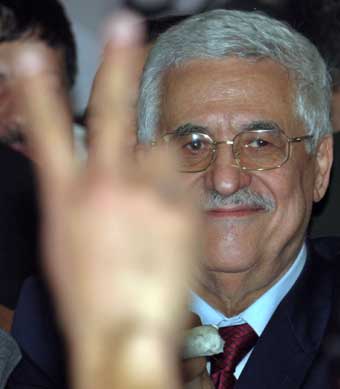
FLC's "Golden Shoe" Candidate
.jpg)
Lebanese Bin Laden sympathizing mufti: "..I would imprison all sectarian leaders & let loose the detained youth of Lebanon.."
From the Clown of Jabal Lubnan, the Bin Laden Sympathizer 'par excellence, Mufti Al Juzu, a scathing attack on SECTARIAN leaders! (No: you're not dreaming!) In that other tabloid, Al Mustaqbal, here ... and the best part is his promise to "imprison" all sectarian leaders and unlock the prison cells that detain "the youth of Lebanon" (I hate to ask: Which detainees is he talking about?)


Obama's Mideast 'team' of Special Envoys ..
Haaretz, here
However, senior government sources in Jerusalem said that the information they have received indicates that the new administration is planning a hierarchy of about five special envoys to various regions, overseen by a kind of "super coordinator," who would answer directly to the president and the secretary of state. ( Pegged for Coordinator: (sigh) Dennis Ross.... and for Mideast envoys (sigh) Dan Kurtzer, Martin Indyk & ...Colin Powell)
Bush bids farewell to 'defining lieu' of his presidency
AP, here
"... this was a victory lap without a victory: Nearly 150,000 U.S. troops remain in Iraq fighting a war that is remarkably unpopular in the United States and across the globe. More than 4,209 members of the U.S. military have been killed in a war that has cost U.S. taxpayers $576 billion since it began five years and nine months ago..."

Report: "Iraq rebuilding effort: $100 billion failure..."
In the NYTimes, here [The report in pdf. here]
"...The United States could soon have reason to consult this cautionary tale of deception, waste and poor planning, as troop levels and reconstruction efforts in Afghanistan are likely to be stepped up under the new administration. The incoming Obama administration’s rebuilding experts are expected to focus on smaller-scale projects and emphasize political and economic reform. Still, such programs do not address one of the history’s main contentions: that the reconstruction effort has failed because no single agency in the United States government has responsibility for the job...."

Saturday, December 13, 2008
"Waltz With Bashir": In Search of the Soldier in His Past...
Ari Folman, the filmaker of "Waltz With Bashir" .... by Ethan Bronner, in the NYTImes, here (reminder: the Lebanese Forces have gone through a period of self loathing and have been rehauled into a truly kinder & politically more tolerant movement. NOT!)
"....His journey of self-recognition, from suppression to acceptance of his role in a despised war and traumatic massacre, may or may not echo a similar process in Israeli society at large. But it has struck a chord. Israelis are seeing the film in large numbers and praising its frank portrayal of life in uniform in a country that has tended to dismiss the psychic damage that can result from being a soldier in war.The film is both the psychologically compelling story of Mr. Folman’s search for his own past — his younger self — based on videotaped interviews he conducted and a scrupulous recounting of the massacre of hundreds (some say thousands) of Palestinians by Lebanese Christian Forces inadvertently facilitated by the Israeli Army ....The massacre was a scene of unspeakable terror in which the Lebanese forces, also known as the Phalange, entered the Sabra and Shatila Palestinian refugee camps and killed randomly for some 72 hours to exact revenge for the assassination of their leader, Lebanon’s president-elect, Bashir Gemayel ..."

Indyk to March14: "Losing the 'Spring Elections' will shake US support"
فيلتمان استذكر صدور القرار 1559 بالقول ان «الفلسفة وراء هذا القرار» كانت تقضي بتسليم حكومة لبنان مصير البلاد، على عكس «الاملاءات على الطريقة السوريةوقال فيلتمان ان بلاده «لا تسعى الى استبدال النفوذين السوري والايراني في لبنان بنفوذ اميركي بل تريد دعم الحكومة اللبنانية وتمكينها من اتخاذ القرارات». كذلك اسدى الديبلوماسي الاميركي نصائح الى السياسيين اللبنانيين بكيفية التعامل مع الادارة المقبلة وقال انه خلال فترة خدمته في وزارة الخارجية منذ الثمانينات،رأى ثوابت حكومته، ودعا اللبنانيين الى «عدم الاستغراق في عادتهم في التحليل السياسي الزائد عن حده لمواقفنا»، معتبرا ان حزب الله» وحلفاءه سيعملون على استغلال اي عصبية من طرف تحالف «14 مارس» في التعاطي مع المواقف الاميركية المقبلة.وقال: «لا تتوتروا فالدعم (الاميركي) للبنان هو واحد من الأعمدة الثابتة في السياسة الاميركية وتم نقشه في القرارات الدولية». واضاف: «ان مبادئ الديبلوماسية الاميركية تعتمد على انهاء الصراع العربي - الاسرائيلي... ثم ان اي ادارة ستستمر في معارضتها للارهاب وسلاحهوختم فيلتمان بالقول ان «حزب الله يخلق التهديدات لتبرير احتفاظه بسلاحه الديبلوماسي السابق ومدير «مركز سابان» في «معهد بروكنغز للابحاث» حاليا مارتن انديك قال ان التزام الولايات المتحدة بلبنان هو «التزام اخلاقي باستقلاله». واضاف: «اذا فاز حزب الله وحلفاؤه في الانتخابات (البرلمانية المقبلة في يونيو، فان ذلك سيزعزع الدعم الاميركي للبنان واعتبر انديك انه على واشنطن دعم «محادثات السلام السورية - الاسرائيلية، لكن من دون التضحية بلبنان وتابع: «علينا المشاركة في رعاية هذه المفاوضات للتأكد من ان استقلال لبنان سيتم المحافظة عليه وقال انديك انه اثناء ادارة الرئيس السابق بيل كلينتون، «كان الاعتقاد السائد ان سورية ستتوصل الى سلام مع اسرائيل وان لبنان سيتبع سورية في ما ستقوم سورية بالاهتمام (بنزع) سلاح حزب اللهلكن الان، حسب انديك، «اختلف الوضع مع مواقف تحالف 14 مارس واصبح نزع سلاح حزب الله مسألة لبنانية وعلى سورية ايقاف شحنات السلاح، فقط، التي تمر الى هذا الحزب عبر اراضيها وختم انديك بالتأكيد على ضرورة استئناف مفاوضات السلام بين بيروت وتل ابيب برعاية اميركية ودولية

(Indyk on the Lebanon-Israel border)
Friday, December 12, 2008
'Americans Currently Don't Care about the Iranian Bomb'
Spiegel interviews Norman Birnbaum, here
"...He knows that he must focus on the domestic front. He can't spend his time calling world leaders, he must get a grip on the domestic agenda because he knows: The American voters currently do not care about the Iranian bomb, they care about the money they need to send their kids to college. The people he has nominated so far understand these constraints. Also, every president has to fight the apparatus in Washington. His cabinet choices are more experienced in dealing with this apparatus. That helps a lot. However, it is certainly a sign of a considerable amount of self-confidence that Obama thinks he can control these experienced players around him..."
WINEP: "The Gulf [Arabs] remain a major source of funding for al-Qaida and its affiliates"
WINEP's Jacobson & Levitt, here
"...LeT operatives and supporters are particularly active in Saudi Arabia and Kuwait, according to US Treasury department information released in the context of LeT-related terrorist support designations.....In 2003, he helped LeT leaders in Saudi Arabia expand the organisation and increase its fundraising activities there. Similarly, the Saudi-based al Haramain Islamic Foundation was designated as a terrorist-supporting entity in part because its office in Pakistan supported LeT....Beyond the terrorism portfolio, the need to secure the full-fledged assistance of our Gulf allies is most pronounced when it comes to Iran...The UAE, like other Gulf countries, is trying to perform a high-wire balancing act when it comes to Iran. On the one hand, the Gulf countries don't like Iran, fear the prospect of it developing nuclear weapons and would prefer not to anger the US. On the other hand, they would like to avoid antagonising Tehran -- the emerging regional power -- and they enjoy the benefits of strong commercial ties to Iran. Qatar's ongoing discussions with Iran and Russia on establishing a gas cartel are indicative of the uphill struggle the US will face in persuading the Gulf countries to financially isolate Iran..."
"Iranian Threat" pure & simple ...
I just noticed that the Jerusalem Post has a top-level link on its Web site called "Iranian Threat":

"Syria's Position is clear: the 'rest' depends on US involvement & Israeli politics" (OXFAN)
SYRIA/ISRAEL: Peace talks depend on "overwhelming US pressure might override the imperatives of Israeli domestic politics"
 ok. The Syria-Israel talks will be shaped by a number of conclusions the Israeli establishment has reached regarding Syria:
1. Genuine motives. It is now clear to Israel that Syria has a genuine interest in advancing the political process with Israel. This interest is based on a recognition not only among the Syrian leadership, but also in Syrian public opinion, that a peace agreement with Israel is likely to serve Syrian interests.
2. Uncompromising conditions. Syrian terms for achieving a peace agreement remain stiff and uncompromising. Syria is demanding the return of the Golan Heights in its entirety, including the Sea of Galilee shoreline. Exaggerated assessments in Israel regarding Syria's possible flexibility on this issue have been repeatedly shown to have no basis in reality.
3. No radical shift. Syria has not shown willingness to clearly and unambiguously distance itself from Iran and Hizbollah. Syria benefits from the strategic space created by the polarisation of the region between Iran and its opponents. At most Damascus has hinted that it would cool those ties, which one might assume would occur in any event once Syria signed a peace treaty with Israel.
4. No goodwill gestures. Syria continues to avoid confidence-building steps. The picture of Assad turning his back on Olmert in Paris in July 2008 dramatically illustrated this policy. This seriously complicates the prospects for Israeli leaders being able to sell an agreement with Syria to the domestic audience.
The Syrian position being relatively clear, the outcome of the talks will depend more on two other variables:
1. Israeli politics. Current polls in Israel suggest that the next government will be considerably to the right of the present government. Likud leader Binyamin Netanyahu is best placed to become prime minister. Even though he has shown himself to be a pragmatic rather than doctrinaire hawk, the bulk of his party is firmly hard-line, comprising those members of the Likud who rejected former prime minister Ariel Sharon's policy of withdrawal from Gaza. A Netanyahu government would furthermore likely depend on support from other right-wing parties that would oppose an agreement. Even should the Kadima leader, Foreign Minister Tzipi Livni, form the next government, her coalition would likely depend on support from parties opposed to withdrawal from the Golan Heights. However, Israeli politics can be volatile, and much could change between now and the Feburary 10 elections.
2. US involvement. The extent to which the new administration is willing to spend political capital on Israel-Syria talks will be decisive as to the outcome. Without active US sponsorship it will be difficult for the talks to progress. The United States is expected not only to cover the costs of peace, including compensation for Israeli settlers, (see below) additional defence aid to Israel, and an economic aid package for Syria, but to exert pressure on the sides to soften their positions. Only overwhelming US pressure might override the imperatives of Israeli domestic politics. The pressing issues of the global economy, the challenges of Iraq, Iran and Afghanistan, together with more mundane matters, could distract the new president from the relentless focus required to achieve an Israel-Syria peace treaty. The new administration may well be content with a tactical stabilisation of the Levant without investing the time and money required to achieve a lasting strategic breakthrough.
CONCLUSION: The road towards an Israeli-Syrian peace agreement remains long and difficult; a breakthrough will depend on the willingness and ability of the new US administration to spend its political capital on the talks.
OutloEVENT: Likud leader Binyamin Netanyahu yesterday told a gathering of 26 EU ambassadors that he supported talks with Syria, but that the Golan Heights should remain Israeli territory.
SIGNIFICANCE: The incoming Obama administration, in concert with European allies, is likely to work to stabilise the Levant in order to contain the instability threatened by troop withdrawals from Iraq and confrontation over the Iranian nuclear programme. Israeli-Syrian talks will probably be at the forefront of such efforts.
ANALYSIS: Since the end of the 2006 war between Israel and Hizbollah, Israel-Syria relations have fluctuated between concern over the outbreak of a confrontation and hope for peace between the two countries.
Tension and relief. After the war, which Damascus saw as a Hizbollah victory, Syrian President Bashar al-Assad felt confident enough to threaten Israel that he would consider military action or Hizbollah-style resistance to regain the Golan Heights. The atmosphere was worsened by increased troop deployments and exercises on both sides of the border. In the midst of these tensions, Israeli jets attacked northern Syria on September 6, 2007. Israeli and US sources claimed that the strike targeted a Syrian nuclear facility built with the aid of North Korea; Syria denied the allegations. Significantly, Syria did not respond to the attack. Nor did it respond when Hizbollah military commander Imad Mughniyeh was assassinated in a Damascus car bomb on February 12. In addition to restoring some measure of Israel's tarnished image of strength, the operations clarified that Assad had no interest in violent confrontation with Israel and demonstrated his ability to control both his military-security establishment and his angry public.
Tentative steps. In late April, Israeli Prime Minister Ehud Olmert sent a message to Assad via Turkish Prime Minister Recep Tayyip Erdogan, in which he said he was ready to committ himself to the "deposit" made by former Israeli Prime Minister Yitzhak Rabin in August 1993. This was a reference to a note to the Clinton administration expressing Israel's willingness, albeit conditional, to carry out a full withdrawal from the Golan Heights. In May 2008, the Israeli and Syrian governments confirmed the resumption of peace talks between the two countries through Turkish mediation -- an unwelcome surprise for the Bush administration, which maintained its hard line towards Syria. The talks were immediately sidelined by an investigation by the Israeli police into corruption allegations against Olmert. What quickly became known as the Talansky affair snowballed to the point of ending Olmert's political career. Nonetheless, Olmert has exploited his remaining time in office to pursue both the Syrian negotiations and other dovish initiatives. The fact that Olmert is the least popular prime minister in Israeli history has helped him promote far-reaching political moves. Feeling unconstrained by public opinion surveys and acting with a grander sense of his own historical importance, he has broken taboos in acknowledging discrimination against Israeli Arabs, in mooting far-reaching concessions to the Palestinians, and in publicly acknowledging that the price of peace with Syria is the full return of the Golan Heights. Olmert's initiatives found support in Israel's intelligence and security community, which saw the benefits of drawing Syria away from its Iranian alliance, blocking Iran's influence and containing Hizbollah.
New administration. In January 2009, the new US administration will start its term in office, auguring a subtle shift in Middle East policy .While sharing the Bush administration's determination to contain Iran, the Obama team is much more sensitive to the negative consequences for regional stability that a confrontation would entail. In order to strengthen its hand against Iran, the new administration is likely to reduce and reorient its deployment in Iraq .It will also work to shore up the stability of the Levant. The Israel-Syria negotiations are the low-hanging fruit in such a project. While Israel-Palestinian negotiations are hamstrung by the complexity of the dispute, the fragmentation of the Palestinian side and the political difficulty of withdrawals in Israeli domestic politics, the Israel-Syria talks involve comparatively much simpler conflict. The Golan Heights is home to roughly 20,000 settlers, as compared to roughly 300,000 in the West Bank.
Tactical success. Syria is the immediate winner from the renewed talks with Israel :
 ok. The Syria-Israel talks will be shaped by a number of conclusions the Israeli establishment has reached regarding Syria:
1. Genuine motives. It is now clear to Israel that Syria has a genuine interest in advancing the political process with Israel. This interest is based on a recognition not only among the Syrian leadership, but also in Syrian public opinion, that a peace agreement with Israel is likely to serve Syrian interests.
2. Uncompromising conditions. Syrian terms for achieving a peace agreement remain stiff and uncompromising. Syria is demanding the return of the Golan Heights in its entirety, including the Sea of Galilee shoreline. Exaggerated assessments in Israel regarding Syria's possible flexibility on this issue have been repeatedly shown to have no basis in reality.
3. No radical shift. Syria has not shown willingness to clearly and unambiguously distance itself from Iran and Hizbollah. Syria benefits from the strategic space created by the polarisation of the region between Iran and its opponents. At most Damascus has hinted that it would cool those ties, which one might assume would occur in any event once Syria signed a peace treaty with Israel.
4. No goodwill gestures. Syria continues to avoid confidence-building steps. The picture of Assad turning his back on Olmert in Paris in July 2008 dramatically illustrated this policy. This seriously complicates the prospects for Israeli leaders being able to sell an agreement with Syria to the domestic audience.
The Syrian position being relatively clear, the outcome of the talks will depend more on two other variables:
1. Israeli politics. Current polls in Israel suggest that the next government will be considerably to the right of the present government. Likud leader Binyamin Netanyahu is best placed to become prime minister. Even though he has shown himself to be a pragmatic rather than doctrinaire hawk, the bulk of his party is firmly hard-line, comprising those members of the Likud who rejected former prime minister Ariel Sharon's policy of withdrawal from Gaza. A Netanyahu government would furthermore likely depend on support from other right-wing parties that would oppose an agreement. Even should the Kadima leader, Foreign Minister Tzipi Livni, form the next government, her coalition would likely depend on support from parties opposed to withdrawal from the Golan Heights. However, Israeli politics can be volatile, and much could change between now and the Feburary 10 elections.
2. US involvement. The extent to which the new administration is willing to spend political capital on Israel-Syria talks will be decisive as to the outcome. Without active US sponsorship it will be difficult for the talks to progress. The United States is expected not only to cover the costs of peace, including compensation for Israeli settlers, (see below) additional defence aid to Israel, and an economic aid package for Syria, but to exert pressure on the sides to soften their positions. Only overwhelming US pressure might override the imperatives of Israeli domestic politics. The pressing issues of the global economy, the challenges of Iraq, Iran and Afghanistan, together with more mundane matters, could distract the new president from the relentless focus required to achieve an Israel-Syria peace treaty. The new administration may well be content with a tactical stabilisation of the Levant without investing the time and money required to achieve a lasting strategic breakthrough.
CONCLUSION: The road towards an Israeli-Syrian peace agreement remains long and difficult; a breakthrough will depend on the willingness and ability of the new US administration to spend its political capital on the talks.
Subscribe to:
Posts (Atom)