"... Well not quite breaking news but…I just watched an incredible interview with Michael Young on France 24. Two and a half years after the Syria revolt broke out, he just now is admitting 1) He was WRONG in predicting that Assad would fall – an incredibly irresponsible”analysis” he has long promulgated and which very much helped to lead to this tunnel of extreme violence we are all now in and 2) that there is NO SOLUTION WITHOUT ASSAD, russia Iran etc.He also suggested that he really does not have a good idea anymore of what to do.
This is simply a breathtaking turnaround for all of us who have watched and argued with Michael about how wrong his analysis and suggestions were in dealing with the crisis in Syria.
Michael has always argued that he is a mere pundit – and not to blame him for US mistakes in the region or anyone elses mistakes. The problem is that he is read, he is taken, mainly by Neo LiberalCons, seriously and some of his best admirers in the Bush administration have used his columns as the ideological basis for some of their most disasterous moves in the region over the last 10 years..."
Showing posts sorted by date for query michael young. Sort by relevance Show all posts
Showing posts sorted by date for query michael young. Sort by relevance Show all posts
Friday, July 12, 2013
Arab neocon: 'I was wrong on Syria: there is NO SOLUTION WITHOUT ASSAD, russia, Iran & allies!'
Nicholas Noe has this on the Arab uber-neocon.


Friday, January 13, 2012
Mossad 'disguised' as CIA to recruit terrorists & saboteurs!

'Buried deep in the archives of America's intelligence services are a series of memos, written during the last years of President George W. Bush's administration, that describe how Israeli Mossad officers recruited operatives belonging to the terrorist group Jundallah by passing themselves off as American agents. According to two U.S. intelligence officials, the Israelis, flush with American dollars and toting U.S. passports, posed as CIA officers in recruiting Jundallah operatives -- what is commonly referred to as a "false flag" operation.
The memos, as described by the sources, one of whom has read them and another who is intimately familiar with the case, investigated and debunked reports from 2007 and 2008 accusing the CIA, at the direction of the White House, of covertly supporting Jundallah -- a Pakistan-based Sunni extremist organization. Jundallah, according to the U.S. government and published reports, is responsible for assassinating Iranian government officials and killing Iranian women and children.But while the memos show that the United States had barred even the most incidental contact with Jundallah, according to both intelligence officers, the same was not true for Israel's Mossad. The memos also detail CIA field reports saying that Israel's recruiting activities occurred under the nose of U.S. intelligence officers, most notably in London, the capital of one of Israel's ostensible allies, where Mossad officers posing as CIA operatives met with Jundallah officials.The officials did not know whether the Israeli program to recruit and use Jundallah is ongoing. Nevertheless, they were stunned by the brazenness of the Mossad's efforts."It's amazing what the Israelis thought they could get away with," the intelligence officer said. "Their recruitment activities were nearly in the open. They apparently didn't give a damn what we thought."...There is no denying that there is a covert, bloody, and ongoing campaign aimed at stopping Iran's nuclear program, though no evidence has emerged connecting recent acts of sabotage and killings inside Iran to Jundallah. Many reports have cited Israel as the architect of this covert campaign, which claimed its latest victim on Jan. 11 when a motorcyclist in Tehran slipped a magnetic explosive device under the car of Mostafa Ahmadi Roshan, a young Iranian nuclear scientist. The explosion killed Roshan, making him the fourth scientist assassinated in the past two years. The United States adamantly denies it is behind these killings.According to one retired CIA officer, information about the false-flag operation was reported up the U.S. intelligence chain of command. It reached CIA Director of Operations Stephen Kappes, his deputy Michael Sulick, and the head of the Counterintelligence Center. All three of these officials are now retired. The Counterintelligence Center, according to its website, is tasked with investigating "threats posed by foreign intelligence services."The report then made its way to the White House, according to the currently serving U.S. intelligence officer. The officer said that Bush "went absolutely ballistic" when briefed on its contents."The report sparked White House concerns that Israel's program was putting Americans at risk," the intelligence officer told me. "There's no question that the U.S. has cooperated with Israel in intelligence-gathering operations against the Iranians, but this was different. No matter what anyone thinks, we're not in the business of assassinating Iranian officials or killing Iranian civilians." (Continue, here)
Monday, August 22, 2011
'Civil War (Hold the Mustard ...)'
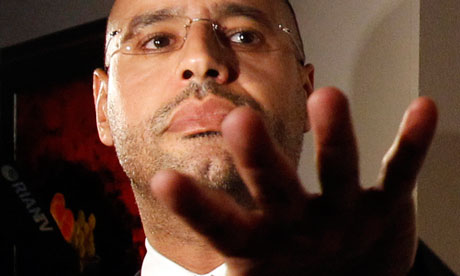
Our friend Michael Bronner (co-producer of among other films, 'the Green Zone') writes: ' As Seif al-Islam al-Gaddfi - son and erstwhile heir apparent of Col. Muʿammar al-Qaḏḏāfī - is now reportedly in custody and, perhaps, headed for the Hague, linked below (in the HuffPost World)is a piece I wrote a few months ago about a Libyan road trip our CBS team made with Seif al-Islam in his previous iteration: The public face of Gaddafi's grand deal with the US and UK to surrender his WMD programs in exchange for improved relations. ...'
"... "Mr. Michael! Your meeting with Mr. Saif al-Islam is tomorrow! In London!" said Mr. L., the young Gaddafi's squire (or something). I was still in Colorado, and it was snowing.Several delayed flights later, finally in a London black cab en route to town with 45 minutes to make the meeting, the phone rang again. It was Mr. L.--"Mr. Michael! The meeting! It is no longer in London!"--"Um..."--"Mr. Saif al-Islam has been called urgently to Geneva. The meeting will take place aboard his airplane. Mr. Ali is waiting for you at your hotel. You can take a shower."Wayne Nelson, a longtime CBS producer and my partner on the piece, was also waiting at the hotel, having flown in from New York. We got into a silver sedan with a stranger who introduced himself as Mr. Ali, a spark plug of a fellow who shepherded us to London City Airport - out onto the tarmac and into a waiting biz jet.As we climbed aboard, we saw them loading Seif's skis into the hold. The plane had sofas for seats. The pilots and flight attendant were spun-up, ready to go. After about 20 minutes, the young Gaddafi, supposedly bound for urgent business, popped up the jet stairs in a ski hat, ready to party and grinning ear to ear...
Sunday, November 28, 2010
Wikileaks [8]: "Siniora advises the US 'not to give any rewards to Syria', and asks the US to 'exploit' cracks in Iran... "
C O N F I D E N T I A L BEIRUT 000818

SIPDIS

DEPT FOR NEA/FO, NEA/ELA
ALSO FOR IO A/S BRIMMER
P FOR DRUSSELL, RRANGASWAMY
DRL/NESA FOR WHITMAN, BARGHOUT
PARIS FOR JMILLER
USUN FOR WOLFF/GERMAIN/SCHEDLBAUER
NSC FOR SHAPIRO, MCDERMOTT
DOD/OSD FOR FLOURNOY/KAHL/DALTON
OVP FOR HMUSTAFA

E.O. 12958: DECL: 07/19/2019
TAGS: PREL PGOV PINR PTER MASS MARR MOPPS LE SY IR
PK, AF
SUBJECT: LEBANON: PM SINIORA TO PETRAEUS: PUSH SYRIA TO GET
BACK IN ARAB FOLD

Classified By: Ambassador Michele J. Sison for reasons 1.4 (b) and (d).

SUMMARY
--------

¶1. (C) Caretaker Prime Minister Fouad Siniora told visiting
Commander General of U.S. Central Command (CENTCOM) General
David Petraeus and the Ambassador June 30 that he was "quite
satisfied" with the outcome of Lebanon's June 7 parliamentary
elections.  Siniora said that the Lebanese had voted for the
state and its institutions and confirmed that Lebanon could
practice its democracy without outside interference -- if
given the opportunity.  He also thanked the United States for
sustained military assistance.  General Petraeus
congratulated Lebanon on the peaceful conduct of the
elections and expressed hope that a cabinet would be formed
soon.  Siniora continued that Lebanon was encouraged by and
supportive of President Obama's efforts to reach a
comprehensive Middle East Peace, but cautioned that
Palestinian resettlement should not come at the expense of
Lebanon.    Siniora encouraged the U.S. to push Syria to
respect the sovereignty of other states (namely Lebanon) as a
way to bring Syria back into the Arab fold, rather than
continuing to align itself with Iran.  General Petraeus hoped
that the obvious cracks in the Iranian system (illustrated by
the demonstrations that followed the Iranian elections) would
distract Iran from malign ambitions in the region.  He also
briefed Siniora on U.S. military assistance in Pakistan and
Afghanistan.  End summary.

¶2. (SBU) Meeting General Petraeus at his downtown Beirut
residence, Siniora was accompanied by his senior advisor Rola
Noureddine.  General Petraeus and the Ambassador were
accompanied by Colonel Bjarne (Michael) Iverson, Executive
Officer; Colonel Mike Bell, Director - Commander's
Initiatives Group; Sadi Othman, Cultural Advisor and
Translator; Ali Khedery, Advisor; Lieutenant Colonel Dave
Wilson, Lebanon Desk Officer, Embassy Defense Attache
Lieutenant Colonel James Lantz, Office of Defense Cooperation
Chief Colonel Joshua Berisford and an Embassy notetaker.

LEBANON: A "MODEL"
FOR THE REGION
-----------------

¶3. (C) Caretaker Prime Minister Fouad Siniora welcomed the
one-day visit of the Commanding General of U.S. Central
Command (CENTCOM) General David Petraeus to Beirut on June
¶30.  Siniora expressed his thanks for sustained U.S. military
assistance to Lebanon and asserted that U.S. security
assistance had contributed to the positive outcome of the
June 7 Lebanese parliamentary elections.  Siniora said he was
"quite satisfied" that the majority March 14 coalition had
shown that its majority was decisive and not "fictitious," as
it had been described by others after the previous elections
in 2005.  He described the electoral outcome as  vote for the
state and its institutions.  Siniora said that although
Lebanon was not the most important country in the world and
despite minor irregularities in the conduct of the elections,
Lebanon had shown that it could be a model of diversity and
democracy -- without outside interference -- in the region.

¶4. (C) General Petraeus congratulated Siniora on winning his
own electoral campaign and the Lebanese people for conducting
peaceful elections.  In addition, he expressed hope that the
new cabinet would be formed soon.  Siniora predicted the
government formation would likely "take some time" because of
debate about "blocking third" veto power for the opposition.

MIDDLE EAST PEACE:
NOT AT THE EXPENSE
OF LEBANON
------------------

¶5. (C) Siniora said that Lebanon was encouraged by and

supportive of President Obama's commitment to achieving a
comprehensive Middle East Peace.  He said the U.S.
administration's recognition of the centrality of the
Israeli-Palestinian conflict was an opportunity to push the
Arab Peace Initiative forward and to finally achieve a
resolution.  The Israelis, however, were being uncooperative,
he accused.  In his June 14 speech, Israeli PM Benjamin
Netanyahu had said "yes" to a two-state solution with but
added "a thousand no's," Siniora analyzed.  The ultimate fate
of Palestinian refugees, could not come at the expense of
Lebanon, Siniora cautioned. (Note: Lebanon has 12 Palestinian
rfugee camps.  The GOL maintains that the Palestinins
should have the "right of return" and is agaist permanent
resettlement ("tawteen") in Lebanon.  End note.)

SYRIA
-----

¶6. (C) Syria, Siniora said, has geopolitical significance.
.......  Siniora commented on the signs of
increased U.S. engagement with Syria, but he advised the
United States to be careful not to give any rewards to Syria
without Syria taking action first.  Most importantly, the
U.S. should not allow Syria -- or other states in the region
-- to use Lebanon as a platform or battleground; engagement
with Syria should not come at the expense of Lebanon, Siniora
said.

¶7. (C) General Petraeus assured Siniora that the U.S.
administration understood Lebanon's concerns.  He told
Siniora that Syrian President Bashar Asad had invited him to
visit several times, but the time was not yet appropriate.
Syria, he added, continues to allow Al Qaeda-affiliated
facilitation networks to operate from its territory and allow
the transit of suicide bombers into Iraq.  General Petraeus
added that the U.S. would like to see Syria return to the
Arab world and develop closer ties to the western world,
rather than continue to align itself with Iran.

IRAN
----

¶8. (C) On Iran, General Petraeus said that the crisis
following Iran's June 12 presidential election had revealed
significant cracks in the Iranian system.  He said the
announced outcome of the election and subsequent
demonstrations showed that the "urban street" and the "young
street" were not supportive of Iranian Supreme Leader
Ayatollah Khamenei.  Candidly, the U.S. would like these
events to distract Iran for awhile from its other ambitions,
such as pursuing its nuclear program, General Petraeus said.
Although, it was too early to determine whether the current
crisis had any significant impact on Iran's ability to
support Hamas, Hizballah, or limit its ability to train and
support foreign fighters in Iraq, he added.  Siniora agreed
that there were definite cracks in the Iranian system and the
internal divisions should be exploited.  However, Siniora
warned against Israel taking any military action against Iran
saying such action would only make the regional situation
worse....

¶12. (U) CENTCOM Commander General Petraeus has cleared this
message.
SISON
Friday, October 8, 2010
"..In Lebanon, the situation is thornier. The Saudis have effectively signed off on a Syrian political revival there .."
A somewhat resigned Michael Young:
"..If any relationship today speaks to the new dynamics in the Middle East, it is that between Syria and Saudi Arabia.The volatile nature of those dynamics has complicated ties between Riyadh and Damascus, when the Saudi regime would have preferred more clarity. At the heart of Saudi worries is Iraq, while at the centre of Syria's preoccupations is Lebanon.Earlier this month the two countries sought to reach an understanding that might advance their interests in both places...In Lebanon, the two Arab leaders endorsed a statement that Lebanese disputes would be settled in the framework of the national unity government...The understanding stabilised Lebanon, but not for long. Each side felt the other had not respected its engagements. Syria, with few means to shape Iraqi affairs and facing Iranian and American backing for Mr al Maliki's return, rallied to that option. In turn the Syrians accused the Saudis of failing to push Mr Hariri to abandon the tribunal, even though they had compelled the prime minister to make a statement to a Saudi newspaper casting doubt on the institution's work and virtually declaring Syria innocent of his father's killing.Despite the strains, the Syrians and Saudis will probably try to preserve their understanding. The Saudis are deeply uneasy that Mr al Maliki may come back, and even more so that this was facilitated by Iran and blessed by the United States.For Riyadh, the new situation only consolidates an Iranian-led Shiite order in Baghdad, even if one can dispute that Mr al Maliki is Tehran's stooge. Consequently, the Saudis hope to gain by maintaining open channels to Syria, since both need to retain a hand in Iraqi affairs as part of their regional leverage.In Lebanon, the situation is thornier. The Saudis have effectively signed off on a Syrian political revival there, hoping this will contain Hizbollah. However, Riyadh holds a weak hand. The Syrians have spent more time undercutting Mr Hariri than they have treating him as an ally...The Saudis are gambling that Syrian self-interest will prevail in Lebanon. Mr Assad wants to dominate alone, they believe, and seeks once again to make Lebanon more a Syrian than an Iranian card. ....... The problem with the Saudi calculation is that if Mr Assad does reassert Syrian hegemony in Beirut, Mr Hariri and the Saudis will be marginalised...Today, Bashar Assad is replicating his father's policies, but he has more to play with. Syria's rapport with a powerful Iran has bought it valuable space with respect to the Arab states, so that in the past five years Mr Assad reimposed his writ in Lebanon over Saudi and Egyptian opposition thanks to his alliance with Hizbollah. Syria has also gained a stake in Hamas, along with Iran, and therefore can hinder Palestinian-Israeli peace negotiations. And Mr Assad has opened up to Turkey, which has served as a mediator between Syria and Israel, allowing him to circumvent Arab or Iranian opposition to talks if required.

The irony is that Syria, on its own, suffers from glaring political vulnerabilities. Its influence in Iraq is largely restricted to subverting the country's security; on the Palestinian track, it is Iran, not Damascus, that is footing Hamas's bills; on the ground in Lebanon, Syria has had to depend heavily on Hizbollah during recent years, while its own partisans are feeble; and when it comes to Israel, Syria has consistently avoided a military confrontation, and remained silent when the Israelis destroyed an alleged Syrian nuclear reactor in 2007.Yet Mr Assad has persuaded one and all, including the Saudis, that Syria is a major player. Being a good illusionist can do wonders, but it also explains why Syria is so often difficult to trust..."
Friday, July 23, 2010
Michael Young is still smoking some really, though different, good stuff....
Whatever happened to Syria, Syria, Syria?
"...In that context, a new attack against western Beirut seems absurd. Nor can Hizbullah attack the mountains, because Walid Jumblatt is now more or less on the party’s side. Destabilizing the government would also be difficult, unless Syria sees an interest in doing so to gain greater leverage over Hariri. But for Hizbullah to bring down the government is much trickier. The Hariri government is, above all, the fruit of a Syrian-Saudi compromise. Hizbullah doesn’t have the latitude to damage relations between Riyadh and Damascus.
So there is not much Nasrallah can do, except rely on Syria ........... Bashar Assad seeks to return Lebanon entirely to the Syrian fold, and indictments would open doors allowing him to play on Lebanese divisions to Syria’s advantage.
Nasrallah is caught in another bind as well. His foremost task, as defined by his relationship with Iran, is to prepare Lebanon for the possibility of a conflict with Israel in the event of an attack against Iranian nuclear facilities. He has largely succeeded on that front. Hizbullah has rearmed, has managed to neutralize serious opposition to its weapons from within the government, and largely controls the activities of the Lebanese Army in southern Lebanon, not to say the major decisions taken by the army’s intelligence service....
Maybe Nasrallah is being too hasty in incriminating his own party."

Monday, May 24, 2010
John Brennan’s Hezbollah proposal is a "thoroughly idiotic scheme"...

Michael Young, who has no problem in seeing moderation in Samir Geagea' (a convicted mass murderer) and in the Kingdom of Saudi Arabia .... denigrates John Brennan, the British .... for his "Hezbollah moderates" remark, and for their open channels with Hezbollah ...... at Young's favorite pulpit, MEOWLebanon/ here
"...... There is indeed a mulish formalism to the thinking of some Americans that makes you wonder if they are serious. For Brennan the world possibly really is divided into “extremists” and “moderates,” and if an organization or country appears uncompromising, then that must simply be because the moderates haven’t yet been discovered.But what a self-centered way of looking at politics, since it assesses the actions of others entirely from the perspective of the interpreter. Brennan assumes that Hezbollah’s thinking, rhetoric, conceptual universe and so on, is perfectly comprehensible within American categories, his categories, which is just another way of saying that the party is not as serious about its own ideas as we assume.A few years ago, the British government came out with an equally amusing sleight of hand, when it opened a dialogue with what it referred to as Hezbollah’s political wing, which it differentiated from the party’s military wing. This was rank hypocrisy, of course. The British knew enough about Hezbollah to realize that it is a highly centralized organization, in fact a Leninist organization in many ways, so that all the loose references to “wings” were just excuses to talk to party officials without being accused by the United States of chatting up what Washington officially labels a “terrorist organization.”But Brennan’s proposal doesn’t even have the saving grace of cynicism. When asked how he proposed to reach the moderates, the presidential advisor offered no answer. That’s because his scheme is thoroughly idiotic. One thing about Hezbollah, its militants generally believe what they say, and when they say that Washington is their enemy, they mean that too. The party’s structure and worldview leave no room for “moderates” or “extremists.” What they allow are debates over tactics, but within well-defined strategic parameters, usually set by Iran, of which opposition to America and Israel is essential.That lesson the St. Joseph University students understood instinctively. You might wonder, justifiably, how young people sent to an institution of higher learning where humanistic values are taught could so readily fall for Hezbollah’s catechism of violence and self-sacrifice. But at least they were not on an illusory quest for “moderates.” Their trip was about guns and war and death, and even if it was cool, they knew it was about guns and war and death.
Thursday, May 20, 2010
Washington beware: Bashar Assad is scheming!
Seriously, I believe that Michael Young shows signs of dementia ... Old scribblings like "controlling the Sunnis, ... stifle Geagea' ... Hezbollah card" have been throttled to death ...Daily Star/ here"... Syrian weapons to Hizbullah appear to be there to serve a more complex purpose. I continue to believe that the primary Syrian objective is to create the proper conditions for a Syrian military return to Lebanon. This is not an easy venture, or one guaranteed of success.... That loss was a bitter one for Bashar, striking at the very heart of his political self-esteem.
But there are more pragmatic reasons as well. Only a military presence allows the Syrian regime to control Lebanon’s Sunni community,.... also allows Syria to stifle its old bugbear, the Maronite community, where Samir Geagea has made headway ..... But perhaps most important, only if Syria is physically present in Lebanon can it turn the “Hizbullah card” to its advantage by projecting itself as the sole actor able to contain the party – which it would nevertheless allow to pursue a “resistance’ agenda, since Syria could use this as leverage whenever it needs to bargain with the Arab states, the US, Israel, even Iran.
If Syria can guarantee that the next war between Hizbullah and Israel is particularly vicious and that Hizbullah can hold its own (Syria’s passing of game-changing weaponry, for example more effective anti-aircraft missiles, would help do so), this could open up numerous possibilities. Israeli retaliation would be ferocious, the Lebanese state and government would emerge from the maelstrom discredited and weak, United Nations resolutions on Lebanon would effectively collapse, and Hizbullah would be perceived by Arab states and Israel as a major regional menace, which Assad could then use as a wedge to facilitate acceptance of a Syrian military comeback.
The absence of a credible UN-sponsored post-conflict framework would be Syria’s opening. No one, least of all the Israelis, would take seriously a new international force in southern Lebanon. That conviction could swing the Americans. Subcontract Lebanon to Syria once again and everyone is happy, the rationale might go.
That’s where the hard questioning should come in Washington. If Syria’s energies are primarily geared toward reestablishing a military presence in Lebanon, then American engagement of Damascus will not change much in Bashar Assad’s plans. Washington needs to move beyond Robert Ford to address the real issue: Syria’s intention to again use Lebanon as the platform from which to become a dominant Arab state."
Sunday, May 16, 2010
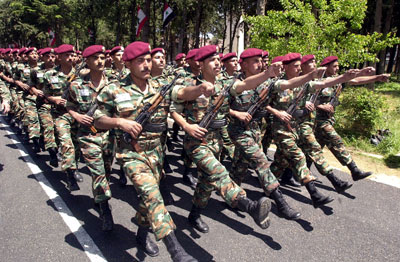
Hariri's Bellmare to issue an indictment between and September and December
Interesting though to hear Cassese say that the Hariri carnival has not been politicized "since 2007.." Post-Mehlis era!
From the ever watchful eye of Michael Young at the The DailyStar ...
"... Cassese added that he did not have any information about the potential culprits or the details of Bellemare’s probe. “I have no idea, because we are very strict (huh?) … The prosecutor does not tell anything [about the investigation] to anybody within the tribunal,” Cassese said. Bellemare’s office did not respond to a request for comment....
At the same time, Cassese believes the tribunal will struggle to find enough donations for its budget next year, because the added costs of a trial would run into state budgets shrunken by the economic crisis afflicting the Western nations bankrolling the court. Lebanon pays 49 percent of the tribunal’s annual budget, which for 2010 amounts to $55.35 million. ..... “The problem will be next year, because if next year – as I very much hope – we have a trial, then we will have to recruit staff.”
Critics have assailed the tribunal as a political tool for the US and its allies to pressure Damascus and Hizbullah. ..... Since the UN voted in May 2007 to form the court, “the whole process has never been political or politicized,” said Cassese, .... The tribunal has also battled negative perceptions over the exodus of key personnel...."
Tuesday, March 30, 2010
WINEP wants the 'Haqq(iqah): "Hunting for Hizballah"

AIPAC does Pennsylvania Ave. while Schenker (and his soul-mate, Michael Young) do Moawad Street! From the looks of it, Schenker is delegating these reports to a 13 years old ... WINEP/ here
"........ Then, in May 2009 Der Spiegel published an article that reported in great detail on how Hizballah operatives participated in the murder, and how the IIIC had discovered the connection. Apparently, one of the militia's operatives "committed the unbelievable indiscretion" of calling his girlfriend from a mobile phone used in the operation, enabling the investigators to identify the man. The revelations contained in the Der Spiegel article sent shock waves through Beirut.....For the pro-West March 14 coalition in Lebanon, the allegations of Hizballah involvement in the murder should come as little surprise. Not only would the militia have had the capacity to carry out the operation, its close allies in Damascus had the motive. Members of the coalition had also been at odds with Hizballah for years, and particularly so since the Hariri assassination and the subsequent Syrian withdrawal from Lebanon. At the same time, a Hizballah connection to the crime would not in any sense absolve Syria -- which then occupied and controlled Lebanon -- of culpability.Yet the IIIC's targeting of Hizballah comes at an awkward time for the March 14 leadership. Although the coalition won national elections this past summer -- and with this victory, the opportunity to form a government -- the opposition compelled the majority, led by Rafiq Hariri's son Saad, to establish a national unity government to include members of the Shiite militia and provide the organization with preponderant influence. Strange bedfellows indeed.Worse, in the months following the election, the March 14 coalition, which had remained fairly stable since its establishment in 2005, started to fray as its leading international backers in Washington and Riyadh sought rapprochement with Damascus. Consequently, in recent months both Saad Hariri and the March 14 coalition's influential Druze leader Walid Jumblat have looked to mend fences with Hizballah and Syria. In the case of Jumblat, the price for this accommodation has been to apologize publicly for his anti-Syrian disposition of recent years, request forgiveness from Syria's Bashar al-Asad regime, and embrace -- at least rhetorically -- Hizballah's "resistance" agenda.For Jumblat, who cut his teeth as a warlord during the Lebanese civil war, rapprochement with Syria was a simple choice between justice and chaos. Given the IIIC's change of focus to Hizballah, Jumblat sensed that implicating the militia in the crime could present a threat to the fragile state's stability. While the Druze leader has not repudiated the tribunal publicly, he appears to be hoping that indictments will not be forthcoming.For Rafiq's son Saad (is WINEP on first name basis?), the calculations are different. As the current leader of Lebanon's Sunni community, Saad cannot afford politically to forgive and forget the reported transgressions of Hizballah. Indeed, Saad Hariri's motto since 2005 has been al-haqq (a 'qiqa' is missing)-- "the truth" -- an allusion to the necessity above all else to find out who killed his father. While Saad demonstrated a sense of pragmatism by visiting Syria this past December, the prospect of forgiving his father's killers would be less palatable.In addition to domestic considerations, Hariri and his government's support (or lack thereof) for the tribunal could have an impact on Lebanon's foreign relations. Because the tribunal was established by the UN, if the government fails to meet its
obligations, then Beirut could encounter bilateral difficulties with Washington and Europe. Clearly, the government of Lebanon is not in a position -- and likely would not be expected -- to render subpoenaed Hizballah suspects to the IIIC. But how would the UN respond if Hizballah were able to engineer the defunding of Lebanon's $23 million annual financial obligation to the tribunal from the state's Ministry of Justice?With two years remaining in its current mandate, the IIIC will probably issue indictments by the end of this year. The threshold for charges in the international criminal court is so high that convictions almost always result. Given the attendant risks, should the tribunal indict even low-level operatives, it is doubtful that Hizballah will allow the accused to live, much less stand trial.At the end of the day, if hearings do occur, they will likely be held in absentia. .......It will be more difficult -- both from an evidentiary and a political standpoint -- for the IIIC to establish connections between the Hariri murder, Damascus, and Tehran that would sustain further indictments. For Washington and the credibility of the tribunal institution, however, it is important that the investigation be given time to unfold.....'
Monday, March 29, 2010
"High-jacking" Lebanon & the World: The 'Hariri Tribunal' carnival...

Michael Young (who, as we say in Lebanon, "still has a souk") inches closer to switching from the 'blame-Syria' to the 'Blame-Hezbollah' mode..... in a 'Happy' Foreign Policy, here
"We're happy to feature today an excerpt from Michael Young's new book, that explores the immediate aftermath of the assassination of former Lebanese Prime Minister Rafiq al-Hariri on February 14, 2005. I caught up with Young to hear his thoughts on how this event continues to reverberate, both in Lebanon and in the international arena. Here's what he had to say:
FP: How does Hariri's assassination continue to affect Lebanese politics today?
MY: ...........Indictments may come later this year or early next, and Lebanese political life is bracing for the consequences, given that although Syria likely gave the order and a suicide bomber actually carried out the attack, Lebanese parties -- many people in Beirut believe Hezbollah -- participated in some capacity. There is fear that an accusation against Hezbollah, if the party was indeed involved, or against other Lebanese might destabilize Lebanon. Still, the Lebanese authorities have a responsibility to go through with this, since from the outset those who supported the investigation and tribunal knew where it might lead, and saw these measures as a way of preventing similar killings in the future. On a more personal level, I feel that for the tribunal to truly succeed, it has to identify all the guilty, not merely low-level enablers. However, I'm not at all sure that this will be the outcome. (but that would do for Michael, bless his heart, as long as the 'low-level enablers' are members of Hezbollah)
FP: You discuss how Hariri's murder caused a fundamental split between the Lebanese Sunni community and the Syrian regime. Has this relationship healed with time, or do Lebanese Sunnis still largely hold Syria responsible for the death of Hariri?
MY: The Sunnis know who killed Hariri (headed by Sunni gliteratti such as Said Mirza & Mufti Qabbani), but the imperatives of Arab politics have intervened to alter the Sunni-Syrian relationship. Just over a year ago, Saudi Arabia began a reconciliation process with Syria--its intention to draw Damascus away from Iran, whose rise the Arab countries, particularly those in the Gulf, view as a threat to their own regimes. An implicit quid pro quo emerged, whereby the Saudis gave Syria greater latitude in Lebanon, in part to contain the pro-Iranian Hezbollah. The Syrians gladly took that offer in order to reimpose their writ in Beirut, but have offered little in exchange. Syria's regime has maintained its close ties with Tehran and continues to arm and support Hezbollah. A byproduct of that Saudi-Syrian rapprochement was a so-called ‘reconciliation' last December between Lebanese Prime Minister Saad al-Hariri, Rafiq's son who is politically beholden to the Saudis, and Syrian President Bashar al-Assad.
FP: The Obama administration recently announced the appointment of Robert Ford as ambassador to Syria -- the first ambassador to the country since the United States withdrew its ambassador following Hariri's assassination. What was the U.S. reaction in response to this attack, and is its resolve to bring the perpetrators to justice waning?
MY: I don't see evidence that American interest in bringing the perpetrators to justice is waning, and from what I'm hearing that's not the case. But can we be sure? (but you're 'hearing' Michael, from say, Erich Follath? so you have to be sure?!) The Hariri investigation (which was independent, we should remember) was and is a complex case that has suffered from investigative flaws. Those shortcomings have tested the commitment of many countries, amid continued reluctance at U.N. headquarters to deal with the consequences of a potentially destabilizing investigation. I don't necessarily believe that Robert Ford's appointment is a sign that Washington has given up on the Hariri investigation. My problem with the step is that the Obama administration got nothing in exchange for that concession; but paradoxically that may only increase its interest in seeing the Hariri tribunal through, in the hope that the ensuing accusations allow it to squeeze the Syrians. That's not to say the indictments, if or when they come, will serve a specific political agenda, but there is no doubt that they will have political consequences. "
Friday, March 19, 2010
"The Saudis may decide that Geagea’s affiliation with Hariri is a serious snag in their rapprochement with Assad.."

".... In fact Jumblatt avoided a negative answer, forcing Bin Jiddu to clarify that he did not want to focus solely on the Lebanese Forces. But the message relayed by the Al-Jazeera correspondent was clear enough: In the future Walid Jumblatt might have to do better than that when mentioning Geagea, at least if he wants to enjoy Syria’s favors.
A longstanding pillar of Syrian policy in Lebanon has been the political containment of the Sunni community. A byproduct of this strategy has been the prevention of a solid Sunni-Christian alliance in Lebanon, with Christians traditionally those most hostile to the Syrian presence.....
Last year, Syria’s Lebanese allies began vowing that Geagea would be their next target. ...Unconfirmed reports suggested that Saudi Arabia was protecting Geagea from Syria, though this perhaps meant only that the Lebanese Forces leader would be spared assassination. In recent weeks, however, there have been new leaks indicating that Syria is annoyed with the Hariri-Geagea bond, and has complained to the Saudis about it.
Why is Damascus so wary of Geagea? There are several reasons, beyond Syrian discomfort with a Sunni-Christian axis. For starters, Geagea has been gaining ground in his community. His organizational skills are doubted by none, and he is the person most likely to inherit a Christian plurality, even a majority, after the demise of the 75-year-old Michel Aoun, who is unlikely to leave behind an effective movement. There are Christians who will never embrace Geagea, but there are also signs that many of those who once disliked him and his party are increasingly in agreement with Geagea for having remained politically consistent.
A second reason is that Geagea has managed to build up ties outside Lebanon that in some ways protect him against Syria. The Saudis will be forever uneasy with the Lebanese Forces leader, given his wartime record, but they may yet think twice before depriving Saad Hariri of a valuable Christian counterpart. Geagea can also depend to an extent on the backing of the United States. This may not have saved him from imprisonment, but now that the Syrians are gone militarily, Geagea can use such ties (bolstered by the close connection he has maintained with Maronite Patriarch Nasrallah Sfeir, someone much appreciated in Washington) to increase his leverage at key moments.....
Despite this, the Syrians see advantages in pressing ahead against the Lebanese Forces leader. For one thing, the Saudis have given Syria a wide berth in Lebanon, and may eventually decide that Geagea’s affiliation with Hariri is becoming too serious a snag in the Saudi-Syrian rapprochement. If so, this could undermine the Lebanese Forces patronage networks. The Syrians also know that Geagea’s partial reliance on Sfeir for his communal legitimacy will one day end. But most important, Syria has succeeded in keeping the Christians divided, and with Aoun and President Michel Sleiman also vying for Christian validation, Geagea is vulnerable.
It will be interesting to see whether Jumblatt, after his Syria trip, continues to avoid criticism of Geagea, or whether he will be start participating in the marginalization of the Lebanese Forces leader. ..... If Jumblatt turns against Geagea, that spells the end of the Christian-Druze-Sunni alliance that made March 14 possible. ..."
Sunday, February 14, 2010
"... Foreign governments fear the instability that might ensue if Mr. Bellemare issues indictments ..."

More praise for Mehlis & criticism of the tribunal's "new leadership" by who else? Nouveaucon, Michael Young in where else? in the NYTimes/ here
"... But the more significant problem actually lies within the United Nations investigation itself. While it has been upgraded to a special tribunal, sitting near The Hague, it has suffered from questionable leadership, lost key members and last year had to release suspects for lack of formal indictments.
The United Nations investigation team was set up in 2005 by Detlev Mehlis, a German prosecutor who had investigated the 1986 La Belle discotheque bombing in West Berlin. Mr. Mehlis had few doubts about Syria’s involvement, and said so in his first report. He asked for President Assad’s testimony (over Syrian protests), interviewed Syrian intelligence officers in Vienna and arrested suspects. When Mr. Mehlis stepped down from his position in December, 2005, he felt he had enough to arrest at least one of the intelligence officers.
However, the investigation wilted under his successor, the Belgian judge Serge Brammertz. Mr. Brammertz issued uninformative reports and displayed a lack of transparency that discouraged potential witnesses, unsure of whether he had solid evidence in hand, from coming forward; he wasted time by reopening the crime scene to determine the kind of blast that had killed Mr. Hariri, which three earlier specialist reports had already established; he failed to follow through on the interviews with the Syrian officers; and though he met with President Assad, he apparently did not formally take down his testimony.....
“The investigation has lost all the momentum it had in January 2006” when Mr. Brammertz took over, Mr. Mehlis told me in 2008. “Unfortunately, I haven’t seen a word in his reports during the past two years confirming that he has moved forward. When I left we were ready to name suspects, but he seems not to have progressed from that stage.”
Mr. Mehlis wasn’t alone in his concern. Two senior Lebanese government officials closely involved with the United Nations investigation also later expressed their misgivings about Mr. Brammertz to me; one of them said that he had “taken the public for a ride” and echoed criticism that his investigation was top-heavy with analysts.
Mr. Brammertz, who stepped down at the end of 2007, declined my request for a response to Mr. Mehlis. More disturbing, the United Nations itself has remained silent, even though Mr. Brammertz’s successor, Daniel Bellemare of Canada, has suffered his own setbacks. Last April, despite having acquired prosecutorial powers, he was forced by the tribunal’s bylaws to release the imprisoned suspects pending an indictment. Mr. Bellemare deserves blame for taking on such a weak case in the first place, effectively legitimizing his predecessor’s shoddy work. But the onus surely lies with Mr. Brammertz, and with those at United Nations headquarters who never held him to account....
The impetus to identify Mr. Hariri’s assassins is gone; not only has Lebanon sought rapprochement with Syria, but the Lebanese public’s expectations, after years of an inconclusive inquiry, have hit rock bottom. Foreign governments fear the instability that might ensue if Mr. Bellemare issues indictments, so few will regret it if he doesn’t. But the United Nations pushed for the Hariri investigation; its integrity is tied up with a plausible outcome. If that’s impossible, there is no point insulting the victims by letting the charade continue. Better to send Mr. Bellemare home."

Thursday, February 11, 2010
"... That’s why the Hariri commemoration feels so hollow to so many ..."

"... Last week, Lebanon was honored with a visit by the president of the Special Tribunal for Lebanon, Antonio Cassese. He reassured us that the tribunal was ready to perform, but that there was no deadline for indictments. Explaining the ongoing delay, Cassese observed: “All acts of terrorism are much more complicated than war crimes, crimes against humanity and genocide.” Perhaps he knows what he’s talking about, but the first investigator appointed by the United Nations, Detlev Mehlis, had less murky a reading of things. As he explained in a 2006 interview: “The Hariri case is an unusual one. Usually in investigations you start at the bottom and work your way up. In the Hariri case we started pretty much at the top and worked down. We had an accurate view of how the assassination took place from above, but less clear a view of what happened on the ground.”In other words, Mehlis had a fairly lucid sense of the chain of command and hierarchy, requiring only a competent investigation at the bottom to fill out the empty spaces. We didn’t get one from Serge Brammertz, and even if Daniel Bellemare eventually finds something, he will very likely not point a finger at the real perpetrators in the Syrian regime.The “Truth” was a potent slogan back in 2005, but the Lebanese, both leaders and obedient followers, are in a different mood today. That’s why the Hariri commemoration feels so hollow to so many. The idealists may have read too much into events five years ago, but they were entitled to expect justice for the victims. Even that is being denied them today."
Wednesday, February 10, 2010
Syria regains strength in Lebanon, without troop presence .... Saudi, Western rapprochement with Syria sealed new reality

"Slowly but surely, Syria has regained influence in Lebanon, but wields it more diplomatically than in the era before the slaying of Lebanese statesman Rafik al-Hariri ..... with a green light from Hariri's regional ally Saudi Arabia, it has recovered its standing abroad, shrugging off Western efforts to isolate it and developing strong new ties with Turkey, a former enemy."There was not even the pretence of diplomacy and dignity," recalled Karim Makdisi, "It's not so much that Lebanon is now a sovereign country," he said, but a more normal relationship had been restored.....The younger Hariri became prime minister after his Western- and Saudi-backed coalition narrowly won a June election against Hezbollah and other Syrian allies. But he heads a national unity government in which the minority enjoys significant power.Lebanese politicians who had hoped the United States, France and Saudi Arabia would block any Syrian interference after the last Syrian troops left in April 2005 have trimmed their sails.Druze leader Walid Jumblatt, once one of Syria's fieriest critics, left the Hariri-led coalition last year to take a more centrist stance -- and is expected to visit Damascus soon.For Marwan Hamadeh, a Jumblatt aide who survived an attempt on his life in October 2004, the new relationship with Syria stops short of genuine reconciliation and cannot obstruct an international tribunal formed to prosecute Hariri's killers."I wouldn't say the Syrians are back," he told Reuters. "In political and intelligence terms they never left.....Most Lebanese politicians now clear their lines with Syria.President Michel Suleiman, a former army commander, holds a weekly call with Assad. Hariri has spoken by telephone to the Syrian leader several times since his trip to Damascus."Once the Syrians and Saudis got together, local politicians would always have to dance to their music," said Makdisi.Anti-Syrian politicians had to compromise because they had realised that Lebanon was "not the centre of the universe" and Western leaders would not come to their rescue, he added.Syria sees its influence in Lebanon as a trump card in any negotiations with the West and Israel, Hamadeh said. The West still wanted to keep Lebanon from coming under Syria's thumb again. "But everything in this world is now relative, especially independence and sovereignty," he shrugged....But progress could be slow on measures that Hariri sees as vital to reinforce a normal state-to-state relationship.....Hariri no longer publicly accuses Syria of orchestrating the huge seafront bomb blast that killed his father and 22 others, saying he will await the outcome of the U.N.-backed tribunal.Investigators initially implicated Syrian and Lebanese security officials, but the tribunal has yet to indict any suspects and critics say it appears to have lost momentum.Lebanese commentator Michael Young said the United States and France, both hostile to Syria at the time, had spearheaded efforts to set up the tribunal, but now had other priorities."Today there is no critical mass to see the tribunal accuse Syria or anybody else. For many in the international community, the tribunal is more a headache than anything else," he argued.Makdisi, the academic, said the tribunal had a life of its own, but might never uncover the truth behind Hariri's killing.


Thursday, December 17, 2009
Al-Qaeda’s Migrant Martyrs

"Lebanon’s Bekaa Valley, start of Abu Khalid’s journey to Iraq"
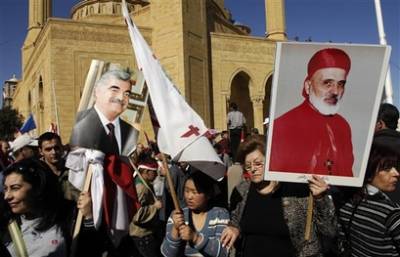
Michael Bronner in Vanity Fair/ here"...Syria’s borders are open to citizens of any Arab country, no visa required, so the drive up the snaking main highway over the Eastern Lebanon Mountain Range and through the official border crossing was straightforward enough. From Damascus, he was driven to the Iraqi border with two other would-be insurgents, where the three men split up. Each was given his own guide for the journey into Iraq....Abu Khalid’s anxious delay in the Iraqi desert would not last long—the insurgency’s “ratline” from the Syrian border to Baghdad was well oiled by then. (He estimates “hundreds” from Lebanon alone had already made the trip.) Soon enough, he’d be in a safe house in Baghdad with sealed windows, sharing it with 15 other Arabs from Libya, Egypt, Kuwait, and Saudi Arabia. He’d know them by aliases....Even at the most lethal peaks of the insurgency, the U.S. military estimated only about 5 percent of insurgents were non-Iraqi, something the Bush administration was long loathe to admit. But the foreigners punched above their weight, with veteran Arab fighters teaching insurgency tactics to Iraqis and young foreign volunteers leading by example in the first deadly waves of suicide bombings....Williams concluded that the bleed-out of insurgent tactics and techniques from Iraq had transformed the Taliban. “I don’t want to call them good guys, but the Taliban weren’t terrorists [prior to 2005],” Williams said. “They have definitely morphed under the influence of al-Qaeda into a bona fide terrorist movement”–one that doesn’t share al-Qaeda’s primary goal of attacking the United States, but has nonetheless become an effective partner against U.S. troops inside Afghanistan. Battle-hardened foreign fighters from Iraq have also emerged in locales as diverse as Lebanon, Yemen, Somalia, Saudi Arabia, and North Africa.....Abu Khalid said he was in a hurry to get back home and get to work, more impatient than scared, and made the relatively risky decision to cross into Syria through an official border post rather than through the desert. (He declined to say which border crossing, only that it was not the same one through which he’d entered.) Once again, he shaved his beard and donned fresh clothing. (I heard from other former insurgents that they would shave several days before attempting the crossing in order to suntan cheeks left pale where their beards had been).
The border was extremely tense, he said. The Syrian regime had upped the number of border guards from 300 to some 12,000: it was his bad luck to be crossing at a period when Syria was trying to earn favor with the U.S., which had long accused the Syrian government of manipulating the flow of foreign fighters into Iraq. “The Syrians, it would seem, randomly caught people crossing the border and would inform the Americans to score points,” Abu Khalid said. “That is why I gave the guard a large bribe—so I wouldn’t be one of those.” The border guard got $200, and Abu Khalid slipped across...."
Subscribe to:
Posts (Atom)